
Weakley County Projected Release Meaning
A scheduled date and an actual release answer different questions. The scheduled date is the agency's current calculation or a point when a person may become eligible for a later decision. The actual date is the custody event recorded after the person leaves that custodian. Court action, a detainer, sentence credit, parole review, or an administrative correction can separate the two.
The word “projected” is therefore a user-facing description, not the name of a universal Tennessee field. Keep the source label attached to the date and note whether it came from FOIL, a judgment, the jail, or another custodian.
Pretrial custody is different. A person awaiting a Weakley County case does not have a sentence-based projected date. A bond order may authorize release, yet jail processing and other holds can keep the person in custody. The Weakley court docket supplies the legal event. Sheriff Terry McDade's department supplies the operational release or transfer event. Both should be checked before stating that release occurred.
A local sentence also differs from a TDOC sentence. Tennessee FOIL warns that split-confinement custody and release questions should go to the local jail administrator. Split confinement means part of the sentence is served in custody and the rest under community supervision. A TDOC date should not be copied onto a Weakley County misdemeanor calculation.
Weakley County FOIL Release Fields
Tennessee FOIL does not display one field called “projected release date.” Its own labels are more precise. Eligibility is the earliest date an inmate may be considered for a recommendation of release to parole supervision after completing the court-ordered percentage. End is the date of release from incarceration or supervision and may be reduced by credits. Neither label should be rewritten as a guaranteed release promise.
FOIL covers felony offenders currently or formerly in TDOC custody or supervision. It is useful after a Weakley County felony sentence leads to state custody. A person held only at the county jail on a local matter may not appear. Search by name, TDOC ID, or SID, and compare identity, status, location, offenses, and sentence fields.
| FOIL field | How to read it |
|---|---|
| Begin | The start of the sentence or sentences. |
| Eligibility | The earliest parole-consideration point under the court-ordered percentage, not a promised release. |
| End | The release date from incarceration or supervision as defined by FOIL, subject to sentence credits and later changes. |
| Status | Whether the person is incarcerated, on parole or probation, inactive, or in another defined state. |
| Hearing | A scheduled Board event, not the physical release date. |
| Result | A Board result such as Continued, Declined, Parole, Revoked, or Serve. |
The official FOIL help page defines these sentence fields and notes the local-jail issue for split confinement.
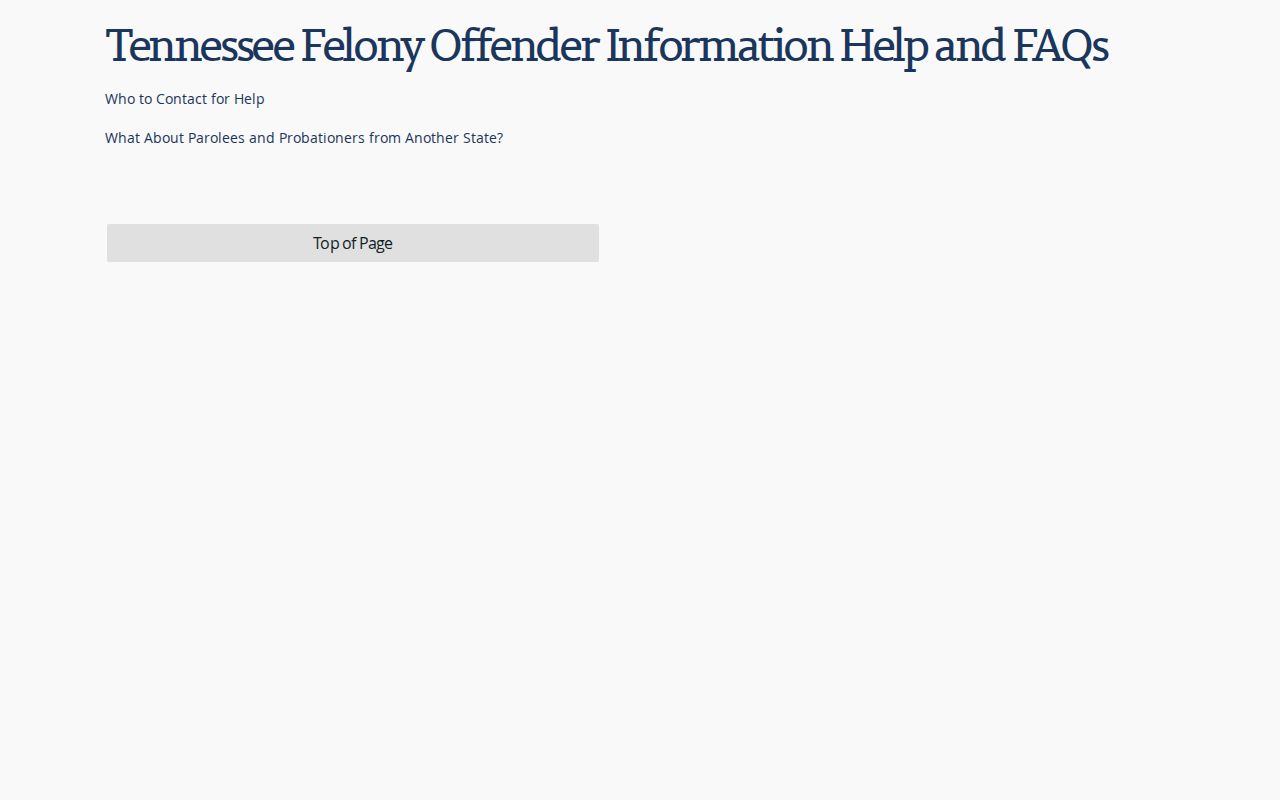
The definitions show why End and Eligibility must stay separate. They also direct a local custody question back to the jail administrator when TDOC does not control that portion of the sentence.
Find Weakley County Projected Release
Begin with the last known custodian. A person booked in Weakley County might still be at the county jail, might have moved to a TDOC institution elsewhere in Tennessee, or might have entered a federal or immigration chain. One portal cannot answer all three. Use the system that holds or sentenced the person.
- Identify whether the person is pretrial, serving a county sentence, serving a TDOC sentence, or held by another system. Check the case and last verified facility.
- For a TDOC felony record, open FOIL. Search by last and optional first name, or use the TDOC ID or SID. Complete the CAPTCHA.
- Compare identifiers and the originating case. Then read status, location, Begin, Eligibility, End, offense, sentence, and hearing fields together.
- For a Weakley County jail sentence or split confinement, call the Sheriff's Department at 731-364-5454 and ask which office maintains the sentence calculation and release entry.
- Check the county-linked court portal for the judgment, sentence, amended orders, credit, and later action. Ask the clerk about an unclear docket entry.
- Save the source and retrieval date. Recheck near the expected event because credits, holds, decisions, and corrections can move a future date.
The live FOIL search form and result view is the state path for current and former TDOC felony offenders.
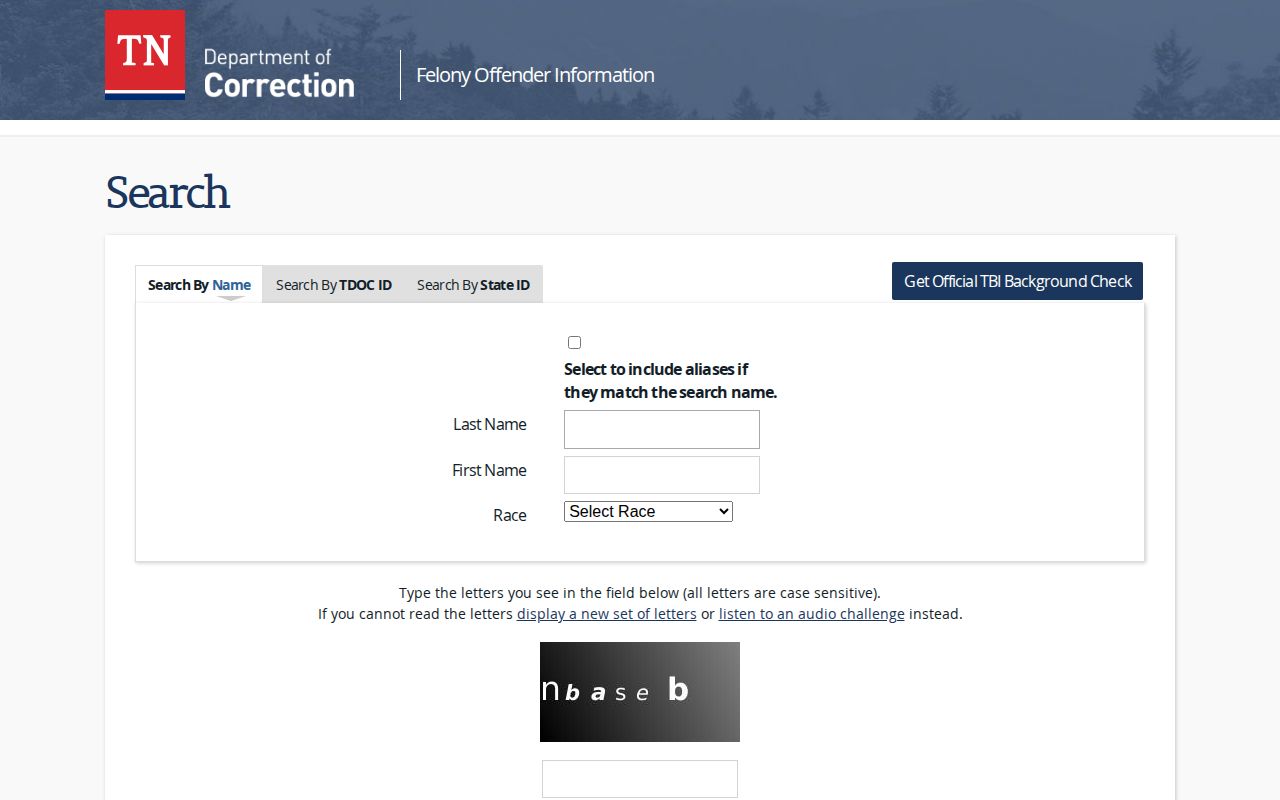
The state result can place Eligibility, End, status, and hearing data in one record. It still cannot establish a county-only detainee's date or prove that a future parole event will occur as planned.
Technical problems with FOIL can be reported at 629-888-5870 or 888-890-8183, or apps.support@tn.gov. Those contacts are for system support. Sentence calculations and case-specific substance belong with TDOC, the jail administrator, or the court that created the judgment.
Note: A time-stamped FOIL result records what TDOC displayed then; it does not freeze a future Weakley County release calculation.
Weakley County Release Eligibility Rules
Tennessee Code § 40-35-501 contains release-eligibility rules tied to the offense, offense date, judgment, and offender range. Traditional range percentages include 20 or 30 percent for especially mitigated classifications, 30 percent for Range I standard, 35 percent for Range II multiple, 45 percent for Range III persistent, and 60 percent for career offenders. Those figures are not a universal calculator.
Some listed offenses have 85-percent requirements or floors. Modern truth-in-sentencing provisions can require 100 percent for certain offenses committed on or after the dates specified in the statute, including a subsection group beginning July 1, 2021. Other distinctions changed around July 1, 2024. As a result, the broad claim that Tennessee is simply an “85% state” is wrong.
The judgment, statutory subsection, offense date, sentence range, and consecutive or concurrent structure all matter. Concurrent sentences run at the same time to the extent ordered. Consecutive sentences run one after another. An amended judgment or appellate action can change the effective structure. The current official code and TDOC sentence-management record should control any live calculation.
TDOC, not the Board of Parole, calculates release eligibility, credits, and sentence expiration for a TDOC sentence. Credits may be earned, retained, withheld, or affected by conduct, programs, and statute. Parole eligibility may also be deferred for disciplinary reasons. A person can reach Eligibility and still remain confined because Board action, release-plan approval, and other conditions have not been completed.
Weakley County Release Calculation Quirks
A sound conceptual calculation starts with the effective sentence and the offense-specific release rule. It then accounts for the range, statutory exclusions, qualifying presentence jail credit, and whether sentences are concurrent or consecutive. TDOC applies authorized credit and disciplinary adjustments. The outcome may produce Eligibility and End fields, yet parole still requires Board action and an approved plan.
County custody breaks that model. A Weakley County sentence can use local jail calculations and court-awarded credit. No official Weakley County jail good-time policy or weekend-release rule was found. There is no researched basis to claim that a Sunday date is moved to Friday, to apply state-prison credits to a local misdemeanor, or to state a fixed processing hour.
Split confinement is a common source of confusion because the sentence spans local custody and supervision. FOIL may show the state record, but its help directs local custody-release questions to the jail administrator. The court judgment supplies the legal structure. The sheriff records the jail event. TDOC controls only the parts assigned to the state system.
Presentence credit also requires an official determination. Tennessee Code § 40-23-101(c) addresses qualifying time confined before sentence. Do not count days from an arrest date and assume the result. A transfer, release on bond, custody in another jurisdiction, or correction to the judgment can alter the credited period.
Why Weakley County Release Dates Change
Future dates change because the underlying sentence or custody chain changes. Some updates move the date. Others keep the date but prevent release to the community. A detainer is a request or legal basis for another agency to take custody. It can cause a handoff even when TDOC records a release from its own institution.
| Factor | Possible effect | Source to verify |
|---|---|---|
| Earned or lost credit | Moves the calculated End or eligibility position as law and policy permit | TDOC sentence management |
| Corrected jail credit | Changes the credited time served before sentence | Judgment, court, and custodian |
| Amended judgment or appeal | Changes sentence length, structure, or authority | Weakley court docket |
| Concurrent or consecutive terms | Changes how multiple sentences combine | Judgment and TDOC calculation |
| Parole action | May grant, decline, defer, revoke, or rescind a release path | Board record and FOIL |
| Detainer or hold | Can transfer the person to another custodian instead of the community | Releasing and receiving agencies |
| Administrative recalculation | Corrects the public date when sentence data changes | TDOC or jail administrator |
A future date should carry the retrieval date and a direction to verify it with the custodian. After the date passes, do not reverse-engineer the actual event from the old estimate. Read the current status and obtain the release or transfer record.
Note: A detainer can end one agency's custody while beginning another agency's custody, so “released” may describe a transfer rather than freedom.
Confirm Weakley County Actual Release
A state prisoner should be rechecked in FOIL after the expected date. Read the current status and location rather than the old Eligibility value. Inactive means no longer under state supervision. Parole or Probation means the person is in the community supervision system. Incarcerated means continued custody. A Board result of Parole may still predate release-plan approval.
For a county inmate, call the Weakley County Sheriff's Department and ask whether the record shows release, transfer, or continued custody under another booking identifier. Then reconcile that answer with the county court docket. A bond or dismissal order may precede physical processing, while another case or hold may keep the person confined.
When the event is still pending, the Weakley County VINELink inmate search can support a custody-change alert. VINE data can lag and reports the agency event, not the court's legal reason. Confirm the alert with the reporting jail or TDOC before treating it as final.
A historical release should be documented from the actual release record, status history, and case record. The Weakley County released-inmate record path separates county, state, and federal sources when the expected date passed but the current custody chain remains unclear.